
On this page · 6 sections
A cloud of winged insects around the lights after a warm, wet evening gets people worried fast. Some of those insects are harmless ant swarms. Some are termites looking for a place to start a new colony. You can usually tell which one in about a minute, if you know what to look at.
How can you tell flying ants from flying termites?
Look at three things: the wings, the waist and the antennae. A jar and a phone camera help. Catch one or two insects, or look at the wings on the windowsill.
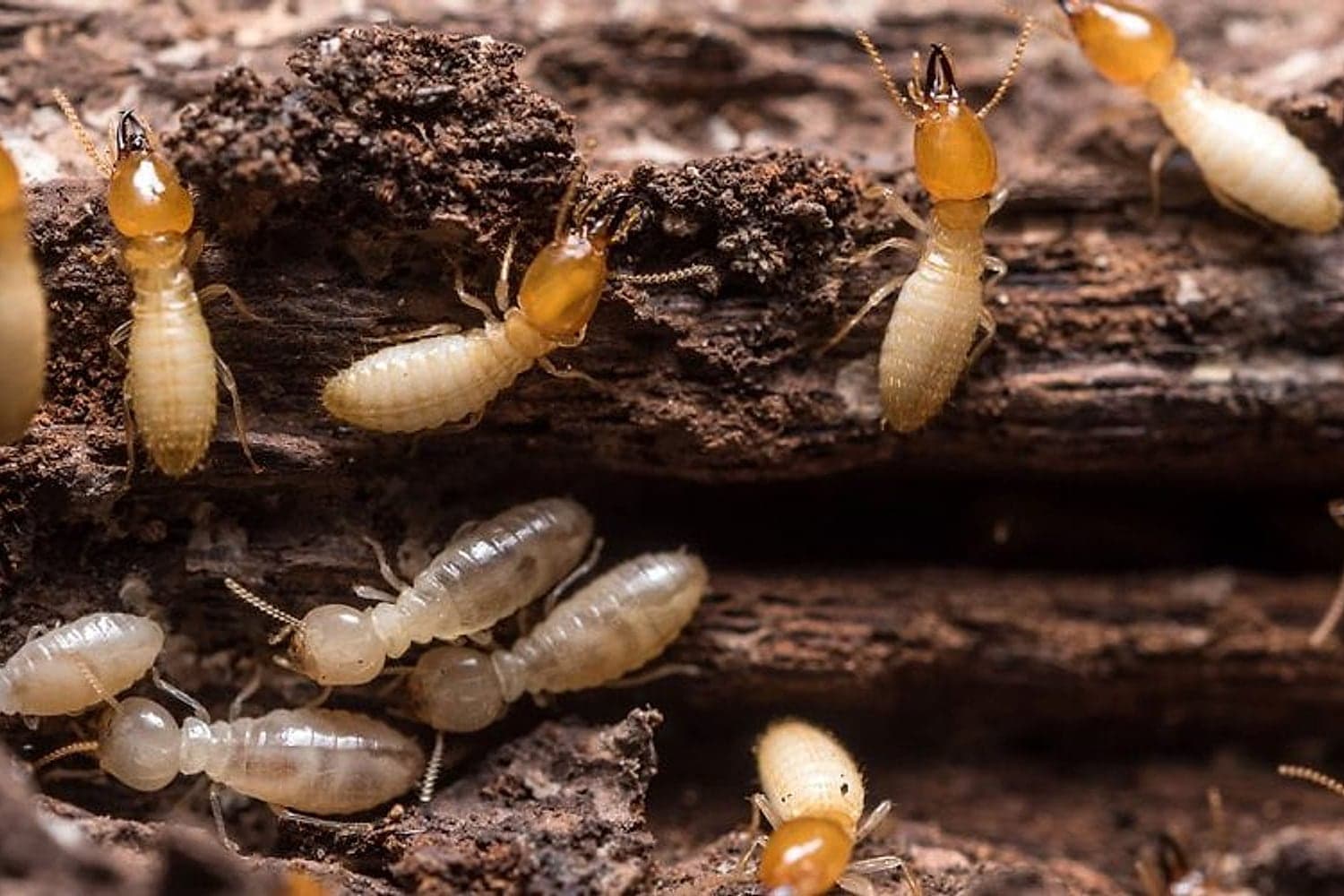
Flying termites, also called alates, have a thick body with no visible waist. Their two pairs of wings are the same size and lie flat along the back, longer than the body. Flying ants have a narrow, pinched waist between the middle and the back end, and their front wings are bigger than their back wings.
| Feature | Flying termites | Flying ants |
|---|---|---|
| Wings | Two pairs, all the same size, often pale and milky | Front pair bigger than the back pair, visible veins |
| Waist | Thick and straight, no pinch | Narrow and pinched |
| Antennae | Straight, like a string of tiny beads | Bent at an elbow |
| Wings after landing | Drop off in a pile within hours or a day | Usually stay on longer |
| Where you find them | Around lights, windowsills, door frames, cracks in timber | Near garden ant nests, paving, lawns, kitchen benches |
A hand lens or the zoom on a phone makes the antennae easy to see. If the photo shows a straight body and four matching wings, treat it as termites until an inspector says otherwise.
Are flying ants termites in Australia?
No. They're different insects. Termites are more closely related to cockroaches than to ants. The old name white ants is still common, and it's the reason people mix them up. Ants have the pinched waist and bent antennae. Termites don't.
Both groups send out winged males and females at certain times of year to mate and start new nests. The swarm is the only stage where you see wings. That's why the wing check matters so much.
When do termites swarm in Brisbane?
Swarms in south-east Queensland often happen in spring and summer, on warm, humid evenings after rain. October to December is the window we tell people to watch. Different species swarm at different times, so a swarm outside those months still counts.
Termites are drawn to light. That's why they end up around lamps, glass doors and window frames at night, and why you find wings on the sill the next morning.
Should I worry if I see flying termites?
Take it seriously, but keep it in proportion. A swarm tells you a mature colony is somewhere close. It might be in a stump, a tree, a fence post or next door. It might be in your house. Most alates die within a day or so, and few start a new colony.
Where you see them matters. A swarm outdoors, well away from the house, is less worrying than a swarm inside, or piles of wings on a windowsill, in a bathroom or in a light fitting. Termites that come out of a wall, a skirting board or a floor gap point to a colony in the building.
What should I do tonight if I see a swarm?
The aim is to keep evidence and avoid making the problem worse.
- Turn off lights near the swarm and close windows and doors, so fewer insects come inside.
- Take photos of the insects, the wings and the spot where they came from.
- Collect a few live insects and some wings in a sealed jar or on clear tape.
- Do not spray them with a household surface spray. It can scatter a colony that's inside the building.
- Note the time, the room and any crack, gap or timber they seemed to come from.
- Clean up the mess only after the photos and the sample are done.
- Book a termite inspection so the timber, subfloor and grounds get checked.
What gets rid of flying ants?
Flying ants come from a nest, and the nest is the thing to treat. Wiping up the winged ones helps for a day but doesn't stop the next batch. A technician finds where the ants are nesting, often in the ground, a wall void or under paving, and treats it. Our ant control page covers what that involves.
If the insects turn out to be termites, the job is very different. Termite work depends on where the colony is and how it reaches the house, so it starts with an inspection to AS 3660 and a written report. Our knowledgebase article on the signs of termites lists what else to check while you wait.
Sources and further reading
General information for South East Queensland conditions. Every property is different; a licensed inspection is the only way to know what is going on in yours.