
On this page · 5 sections
Small brown cockroaches in the kitchen and big reddish ones in the garage are two different problems. They need different treatment, so it pays to know which one you've got. Here's how we tell them apart on a job in Brisbane.
How to tell a German cockroach from an American one
Size is the fastest clue. A German cockroach (Blattella germanica) is about the length of a fingernail clipping, light brown to tan, with two dark stripes running down the plate behind its head. An American cockroach (Periplaneta americana) is close to three times that length, reddish brown, with a pale yellowish edge around the plate behind the head.
The next clue is where you found it. Small ones in the kitchen, bathroom or laundry, especially behind the fridge or under the sink, are almost always German. Big ones in the garage, near drains, or wandering across the patio at night are usually American or one of its relatives.
| Feature | German cockroach | American cockroach |
|---|---|---|
| Size | About 10 to 15 mm | Around 30 to 40 mm |
| Colour | Light brown or tan, two dark stripes behind the head | Reddish brown, pale band around the edge behind the head |
| Where you find it | Kitchens, bathrooms, laundries, close to food and warmth | Drains, sub-floors, roof voids, garden areas, garages |
| How it breeds | Female carries the egg case until just before it hatches, so numbers build fast indoors | Female drops the egg case in a sheltered spot, usually with fewer eggs per case |
| Flying | Has wings but rarely flies | Can glide and fly short distances in warm weather |
| Why it's a problem | Stays indoors and breeds in your kitchen | Comes indoors from outside, carrying bacteria from drains and bins |
What about the other cockroaches you see in Brisbane?
There are a few more. The Australian cockroach and the smoky brown cockroach look like American cockroaches at a glance and live in the same sort of places. Smoky browns are dark, glossy and often turn up around gardens, gutters and under eaves, and they're drawn to lights at night.
If what you have is big, lives outside and only comes in now and then, treat it as an outdoor-to-indoor problem. If it's small and always in the kitchen, it's the German kind. When in doubt, a photo or a jar sample helps our technician identify it. Our guide to cockroach infestation signs covers droppings, egg cases and smells in more detail.
Why are German cockroaches so hard to get rid of?
A German cockroach female carries her egg case until just before it hatches, so the eggs are protected from most things you spray. The young reach adulthood quickly in a warm kitchen, and they hide in the tightest cracks, in hinges, behind splashbacks, inside appliance motors and in the gap under a cupboard kickboard.
Brisbane's warm, humid weather doesn't help. Roaches stay active most of the year, and a leaking tap or a dripping dishwasher gives them water all night. By the time you see one in daylight, there's usually a crowded hiding spot nearby.
Why gel baiting works and sprays often don't
A surface spray kills the roaches that walk through it, but a spray can also drive the rest deeper into wall cavities and appliances. It doesn't reach the nest, and it leaves the protected eggs alone. A fresh generation then hatches and the numbers rebound.
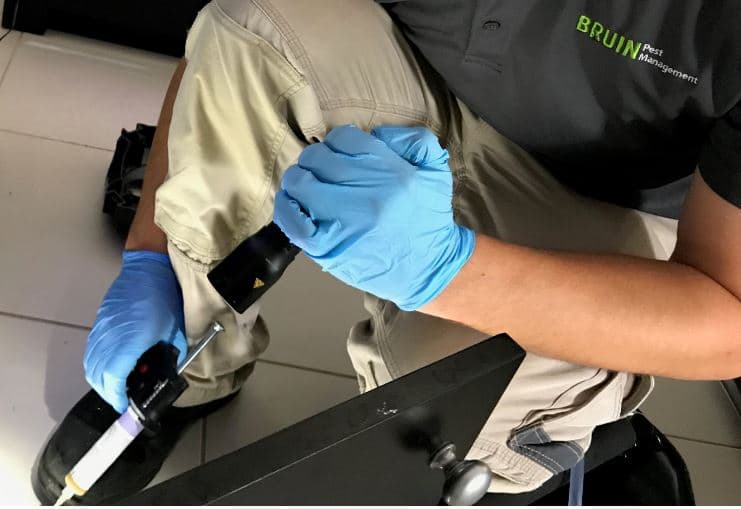
Gel bait works differently. A licensed technician places tiny dots of gel in the cracks and hinges where German cockroaches hide. They eat it, take it back to the harbourage, and the bait affects others that feed on them. Because gel goes right into the hiding spots in small amounts, it's also tidy to use in kitchens. Your technician picks the product and placement and tells you how to keep food and pets away from it.
What to do while you wait for treatment
Small habits help the treatment work. Clean up crumbs and grease, wash dishes before bed, and put pet food away overnight. Fix leaks under sinks and keep the bin lid shut. Clear clutter from around the fridge and under the sink, so the technician can reach the hiding spots.
- Wipe benchtops and the stovetop at night, and sweep the floor
- Store dry food in sealed containers, including pet food
- Fix dripping taps and wipe up water around the sink and dishwasher
- Take out cardboard boxes, as roaches shelter and lay eggs in them
- Note where you've seen them or found droppings, and tell the technician
If you run a cafe or restaurant, a German cockroach problem is also a food safety problem, so speak up early and ask about a regular service.
Sources and further reading
- Queensland Health (opens in a new tab)health.qld.gov.au
General information for South East Queensland conditions. Every property is different; a licensed inspection is the only way to know what is going on in yours.