
On this page · 6 sections
You've found a house, and the contract says building and pest inspection. Now you're wondering what the pest part actually gets you, and how long you've got to do it. Here's what a timber pest inspection covers, what it can't see, and how it fits with Queensland contract timing.
What does a pre-purchase pest inspection include?
The inspector walks the whole property and looks for signs of timber pests. They check what they can safely see and reach. Bruin's technicians use moisture meters and movement detection alongside a visual check, and you get a written report.
- Interior rooms, including skirting boards, door frames, window frames and wet areas.
- The roof void, where there's safe access.
- The subfloor, on houses with one, including stumps, piers and bearers.
- The exterior walls, eaves, decks, pergolas, steps and any attached timber.
- The grounds, including fences, retaining walls, stumps, garden timber and trees near the house.
- Moisture readings and movement detection at areas of concern.
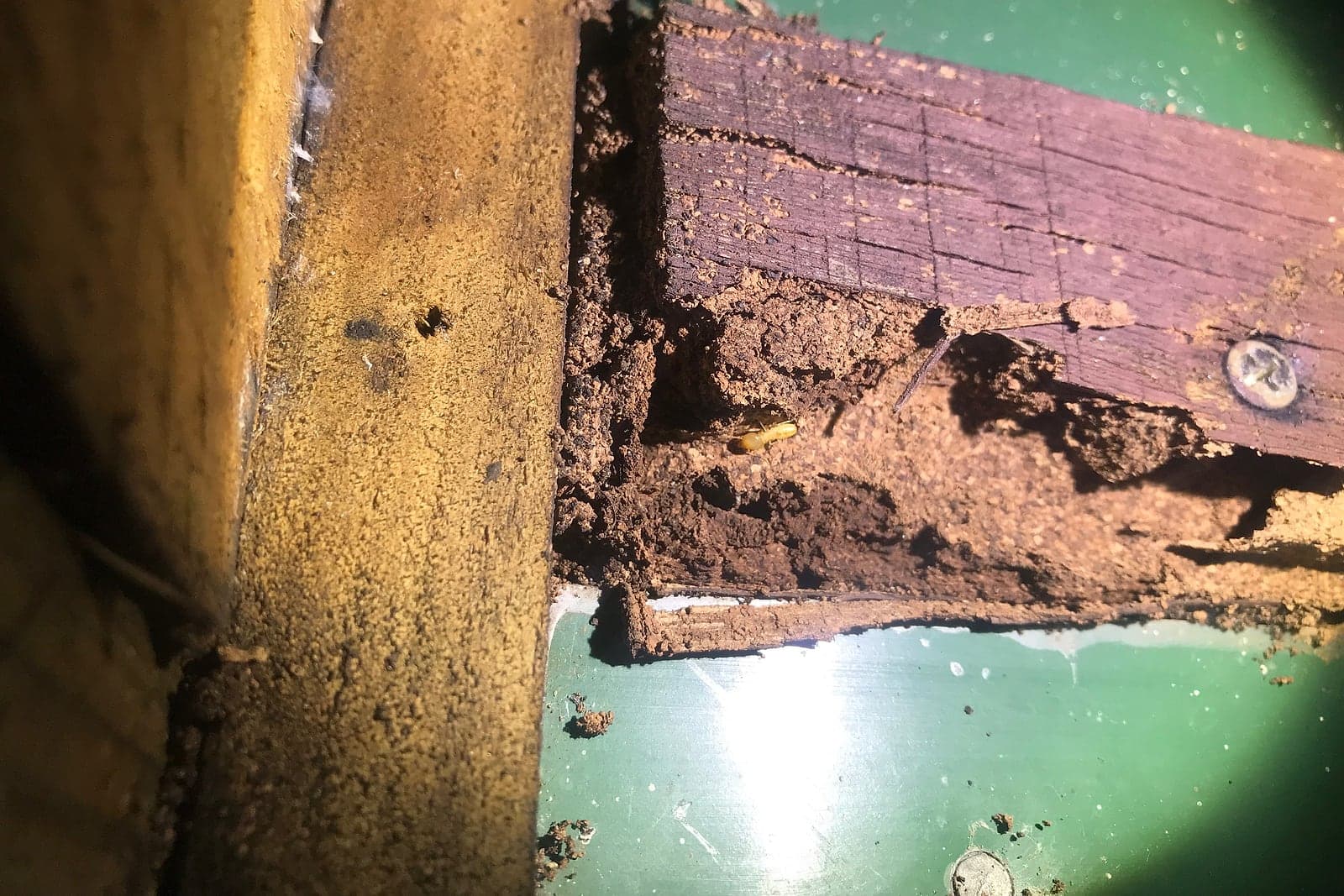
- Photos of any activity, damage or conditions of concern.
The report is about timber pests only. That means termites, borers and timber decay.
Timber pest report or building inspection: what's the difference?
They're two different reports written to two different standards. Bruin does the timber pest side, to AS 4349.3. We don't do the structural building inspection (AS 4349.1), and we'd rather say so plainly. Buyers usually book a licensed building inspector for that part, and the two reports sit side by side.
| Report | Standard | What it covers | Who does it |
|---|---|---|---|
| Timber pest inspection | AS 4349.3 | Termites, borers, timber decay | Bruin |
| Building inspection | AS 4349.1 | Structure, defects, safety issues | A separate building inspector |
Some companies sell the two as one package. If you'd prefer one booking, ask who is doing each half. Our pre-purchase page covers what Bruin's part involves.
How do you read a timber pest report?
Layouts vary between companies, but a report to AS 4349.3 usually works through the same questions. Read the summary first, then the detail.
- Was any active termite activity found, and where?
- Was there evidence of past activity, or past treatment?
- What damage was found, and how far does it go?
- Are there conditions that attract termites, such as moisture, timber touching soil, or a covered slab edge?
- Which areas couldn't be inspected, and why?
- What does the inspector recommend, such as treatment, a further inspection or a management system?
Pay the most attention to the areas that weren't accessible. A report can only speak for what the inspector could reach.
What can a pest inspection not see?
An inspection is visual and non-invasive. The inspector doesn't cut into walls, lift flooring or move heavy furniture. Insulation, stored goods, tight roof voids or a sealed subfloor can block access. Termites can also feed inside timber for a while without a surface sign.
Good reports state their limits. If access was restricted, the report should say what was missed and may recommend a further inspection once the area is cleared. Instruments help, but they don't replace access.
How does Queensland contract timing work?
This is general information, not legal advice. Talk to your solicitor or conveyancer about your own contract. The standard REIQ contract includes a building and pest inspection condition that a buyer can use, and it sets a timeframe. Check the wording, including how many days you get.
Cooling-off is a separate thing. For most private-sale residential contracts in Queensland it's five business days, and using it has a cost. Auctions have no cooling-off period. The qld.gov.au buying pages and the Office of Fair Trading explain the rules.
| Sale type | Cooling-off | When to inspect |
|---|---|---|
| Private sale, standard contract | Five business days, unless waived | Within the timeframe in your contract's inspection condition |
| Auction | None | Before auction day, because you can't back out after the hammer falls |
| Contract where cooling-off is waived | None | Before you sign |
Book early. Inspection timeframes are short, and a Brisbane weekend can fill fast.
Who pays, and how long does it take?
The buyer usually pays for inspections. Bruin quotes the timber pest inspection after we hear about the property, so we don't publish a price here. The time on site depends on the size of the house, the subfloor and how easy it is to reach the roof void. Ask when you book.
The report follows after the inspection. Read it before your condition runs out, and ring us if any part is unclear.
Sources and further reading
General information for South East Queensland conditions. Every property is different; a licensed inspection is the only way to know what is going on in yours.