
On this page · 5 sections
Registered products, applied where they work and not where pets reach
Every product a licensed technician carries is registered for pest control use and comes with clear instructions on dose and placement. The point of the whole treatment is correct placement and the right amount, not a heavy coating of chemical across your home. All chemical products carry instructions for a reason, and following them is what keeps a treatment both effective and low risk.
In practice, treatments are aimed at the edges and entry points where pests actually travel, such as skirting lines, weep holes, subfloors and the external perimeter. These are places most pets do not spend their time. A general pest control visit is planned so the active areas sit away from food bowls, bedding and the middle of the floor where your dog or cat lies down.
Keep pets off treated surfaces until dry
The simplest safety step is timing. After an internal treatment there is a short drying window, usually a couple of hours, and the technician will confirm the exact time on the day based on the products used and the Brisbane weather. Until surfaces are dry, keep cats and dogs out of the treated rooms and off the treated edges.
The easiest approach is to secure pets in a room that is not being treated, or take dogs out for a walk during the appointment and the drying time. Once the technician confirms everything is dry, normal life resumes and your pets can move through the house as usual. Avoid wiping or mopping the treated skirting lines afterwards, as that removes the product early rather than protecting your pet.
Fish tanks, bird cages and pet bowls
Fish and birds are more sensitive to spray drift than cats and dogs, so they need extra care. Before an interior treatment, cover the fish tank and switch off the air pump for the duration of the visit and while surfaces dry, then turn the pump back on once the technician confirms the area is clear. Cover or move bird cages out of any room being treated.
Pet food bowls and water bowls should be emptied and put away before the technician arrives, and pet bedding is best moved out of the treated rooms too. Removing these items keeps them clear of any drift and gives the technician clean edges to treat.
Gel baits, flea treatments and pet homes
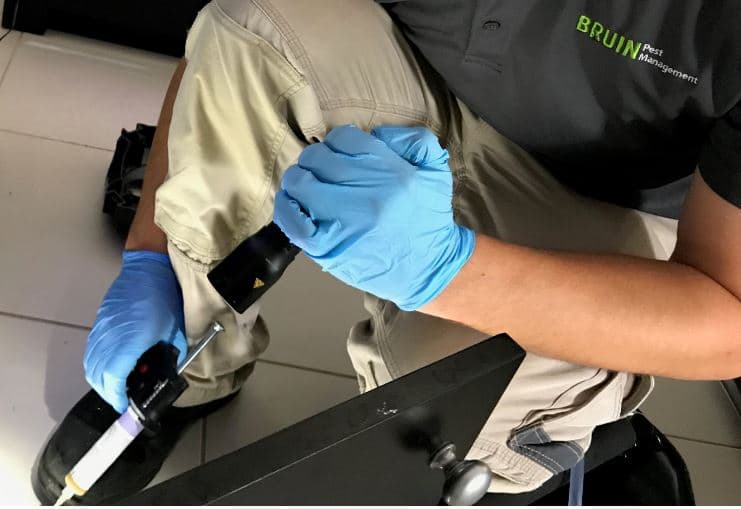
Not all pest control is spray based. For cockroaches, technicians often use gel baits placed into cracks, hinges and voids where pests hide and curious pets cannot reach. Baits placed out of sight are one of the more discreet options in a home with animals.
Flea control deserves a mention because fleas and pets are closely linked. An effective plan usually treats the home environment where flea eggs and larvae live, such as carpets, skirting lines and pet resting spots, while your vet handles the treatment applied directly to the animal. The two work together. Tell your technician where your pet sleeps so those areas are covered rather than missed.
Before and after, and telling us about sensitive animals
A little preparation makes the day smoother. Beforehand, pick up loose pet toys and bedding, put bowls away, and clear a path around the edges of each room. Afterwards, ventilate the treated rooms by opening windows once you return, and keep pets off the treated edges until dry.
Most importantly, tell the technician about any pets with allergies, breathing sensitivities, or health conditions, along with reptiles, chickens or other animals that need special handling. That information lets us adjust the plan, the products and the placement to suit your household, which is safer than a one-size-fits-all approach.