
On this page · 6 sections
Food and moisture are the main draw
Ants come inside looking for two things: food and water, and a kitchen offers both. Sugar is the big one. A sticky ring under the honey jar, a splash of juice, toaster crumbs, grease on the stovetop and pet food left down overnight all read as a meal to a foraging ant.
Moisture matters just as much, especially in a dry spell. A leaking tap, condensation under the sink or a damp sponge will pull ants in even when the food is sealed. Overflowing rubbish bins are a classic magnet because they offer food and moisture together. Remove those two and you remove most of the reason ants come inside.
How one scout turns into a trail
The single ant wandering across your bench is a scout, out searching. When it finds food, it heads back to the nest laying down a chemical scent called a pheromone trail as it goes.
Other ants pick up that trail and follow it straight to the food, reinforcing the scent each time. That is why a lone ant in the morning becomes a marching column by lunchtime, and why the ants keep using the exact same route along a skirting board day after day. It also explains why simply removing the food they found does not always stop them straightaway.
The ants you see in Brisbane
Most kitchen invaders around Brisbane are small nuisance ants rather than anything that damages the home. Black house ants are the common tiny black ant trailing across benches and into the pantry. Coastal brown ants, sometimes called big-headed ants, are a small light brown ant that pushes little piles of soil up between pavers and around the slab edge.
The key point with both is that they nest outdoors, under paths, in garden beds or against the warm edge of the house, and only forage inside. The ants on your bench are visitors from an outside colony, so the problem to solve is not on the bench, it is in the ground outside.
Why wiping the trail or spraying does not fix it
Wiping a trail with detergent clears the scent for a while and the ants scatter, which feels like a win. But the nest outside is untouched, so fresh scouts find the food again and a new trail forms within a day or two.
Spraying the ants you can see is worse than it looks. A surface spray kills the few foragers on the bench while the queens and brood keep producing more. Many retail sprays are also repellent, and repellent products can split a colony: the ants avoid the treated zone and the nest buds into several smaller ones in new spots. You end up with more trails than you started with, and killing what you see never reaches the nest.
Practical ways to keep ants out
Prevention is about removing the food, the water and the easy way in. Store sugar, honey and cereal in sealed containers. Wipe up spills and crumbs promptly, clean grease off the stovetop, and do not leave pet food down overnight.
Manage the bin: rinse it, keep the lid closed and take rubbish out regularly. Fix dripping taps and wipe down damp areas under the sink. Outside, seal the gaps ants use, around pipes, weep holes and window frames, and trim back plants touching the walls, since branches act as bridges. None of this poisons the colony, but it makes your kitchen a far less attractive stop.
Why baiting works and when to call a professional
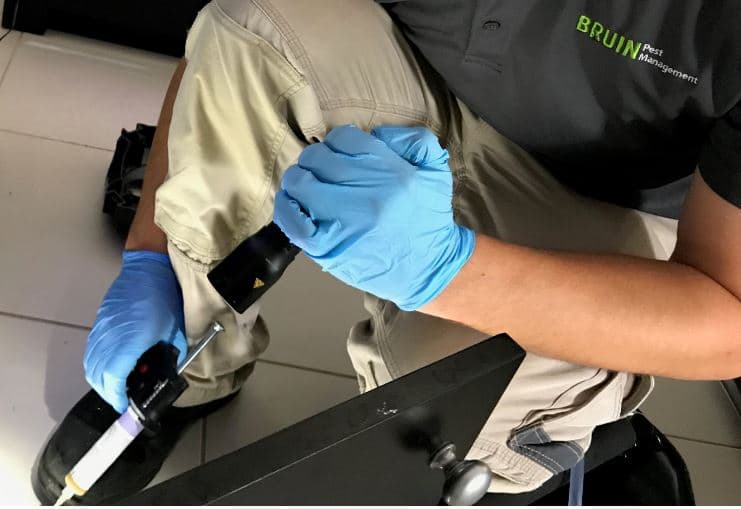
Baiting works because it uses the colony against itself. A good ant bait is carried, not made to kill on contact, so foragers take it back along their trail and share it through the nest, reaching the queens and brood a spray never touches. It is slower for a day or two, which is the point.
DIY bait stations on the trail handle light, occasional activity. It is worth calling a licensed technician when the ants keep coming back, when you cannot reach the nest, or when several trails appear. A professional ant control or general pest control treatment targets the outdoor nest and the perimeter with non-repellent products that avoid splitting the colony. General pest treatments start from $180 and treat the source rather than the symptom.